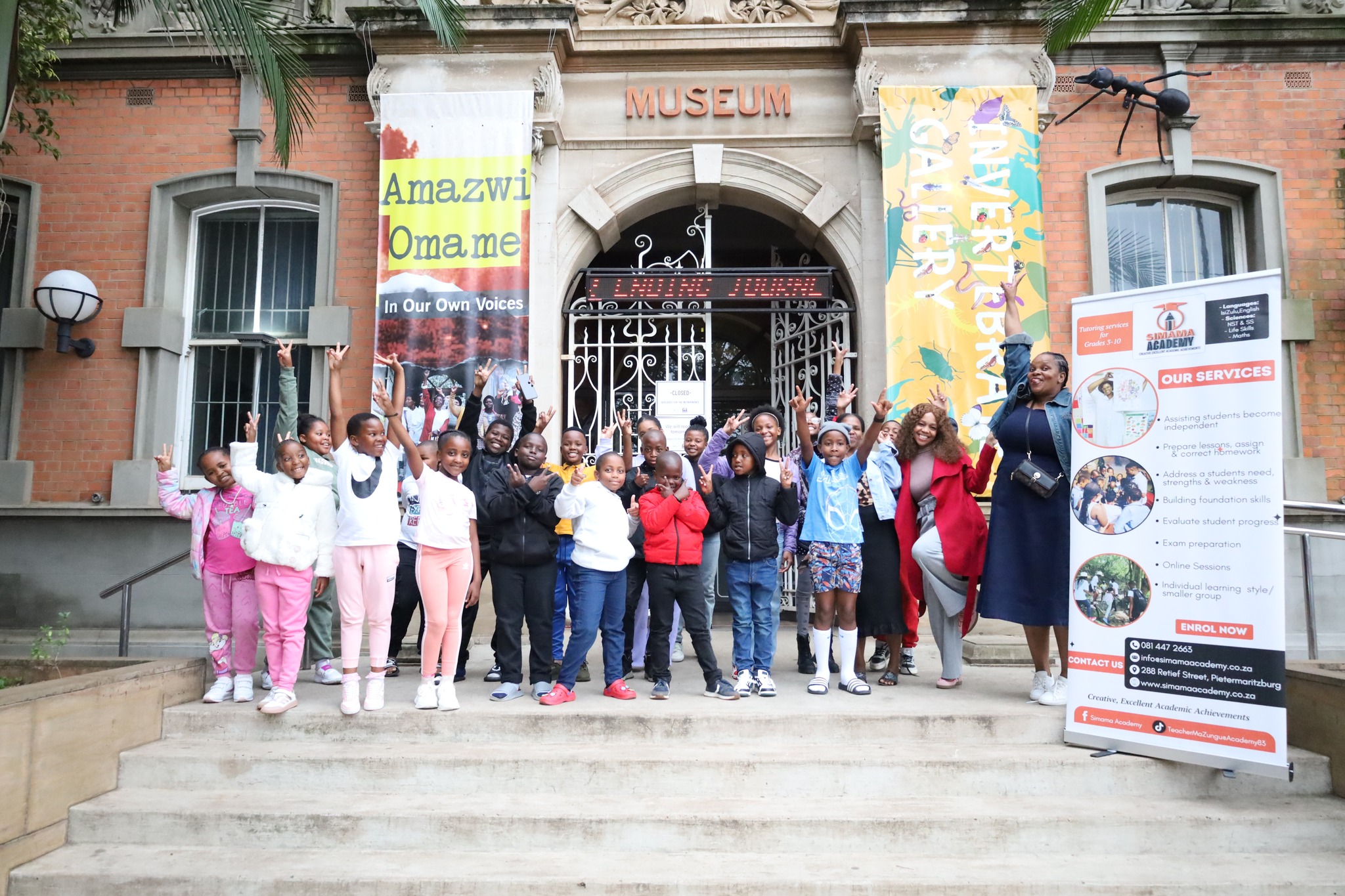
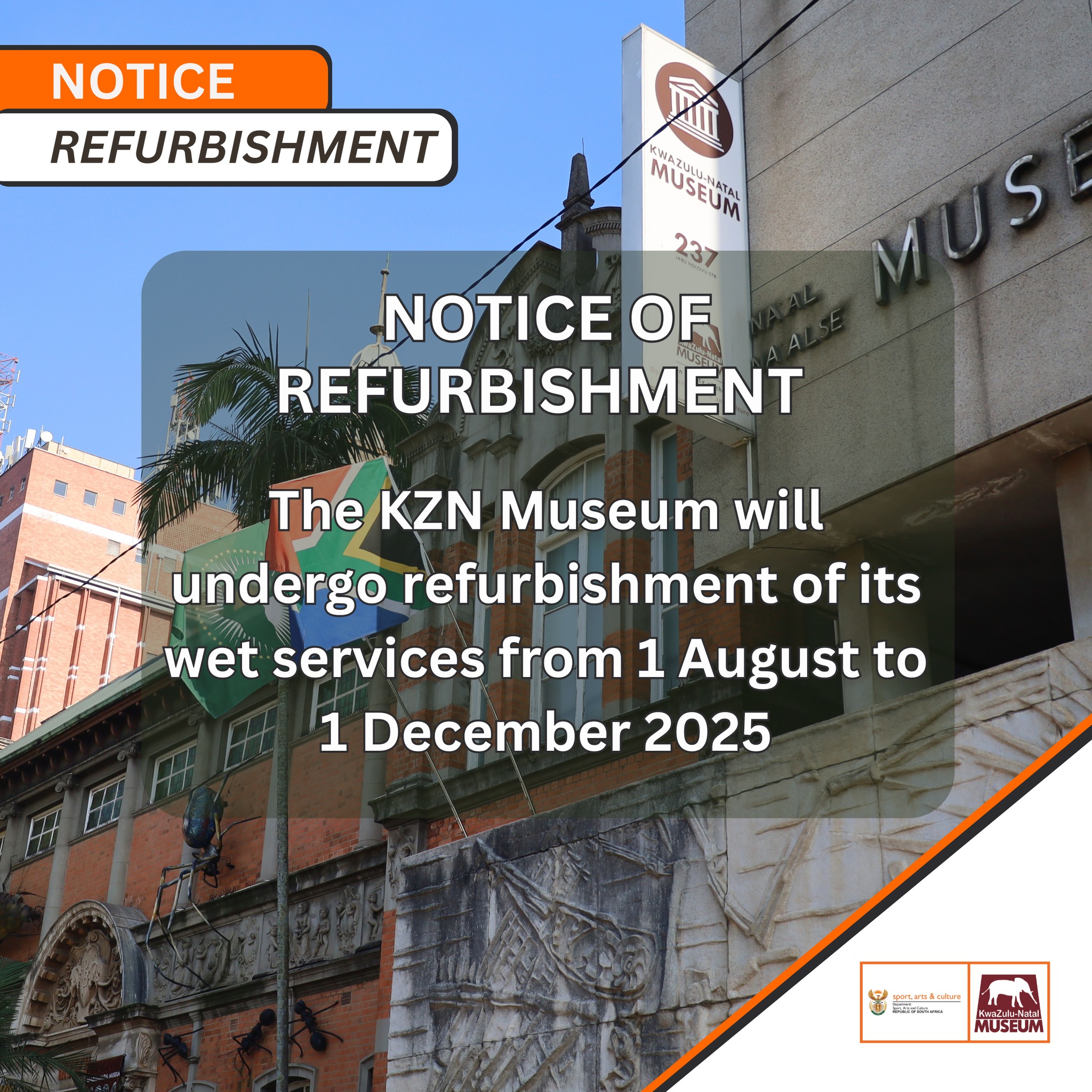
Heading layThe KwaZulu-Natal Museum will be closed from 𝗦𝗮𝘁𝘂𝗿𝗱𝗮𝘆, 𝟭𝟮 𝗡𝗼𝘃𝗲𝗺𝗯𝗲𝗿 𝟮𝟬𝟮𝟮 𝘁𝗼 𝗧𝘂𝗲𝘀𝗱𝗮𝘆 𝟮𝟮 𝗡𝗼𝘃𝗲𝗺𝗯𝗲𝗿 𝟮𝟬𝟮𝟮 due to refurbishment of the wooden floors in the ground floor area.
As a safety measure from the dust and fumes expected to be produced from the refurbishment of the wooden floors, the Museum will be closed to members of the public from the 12th to the 22nd of November 2022 (inclusive of both days).
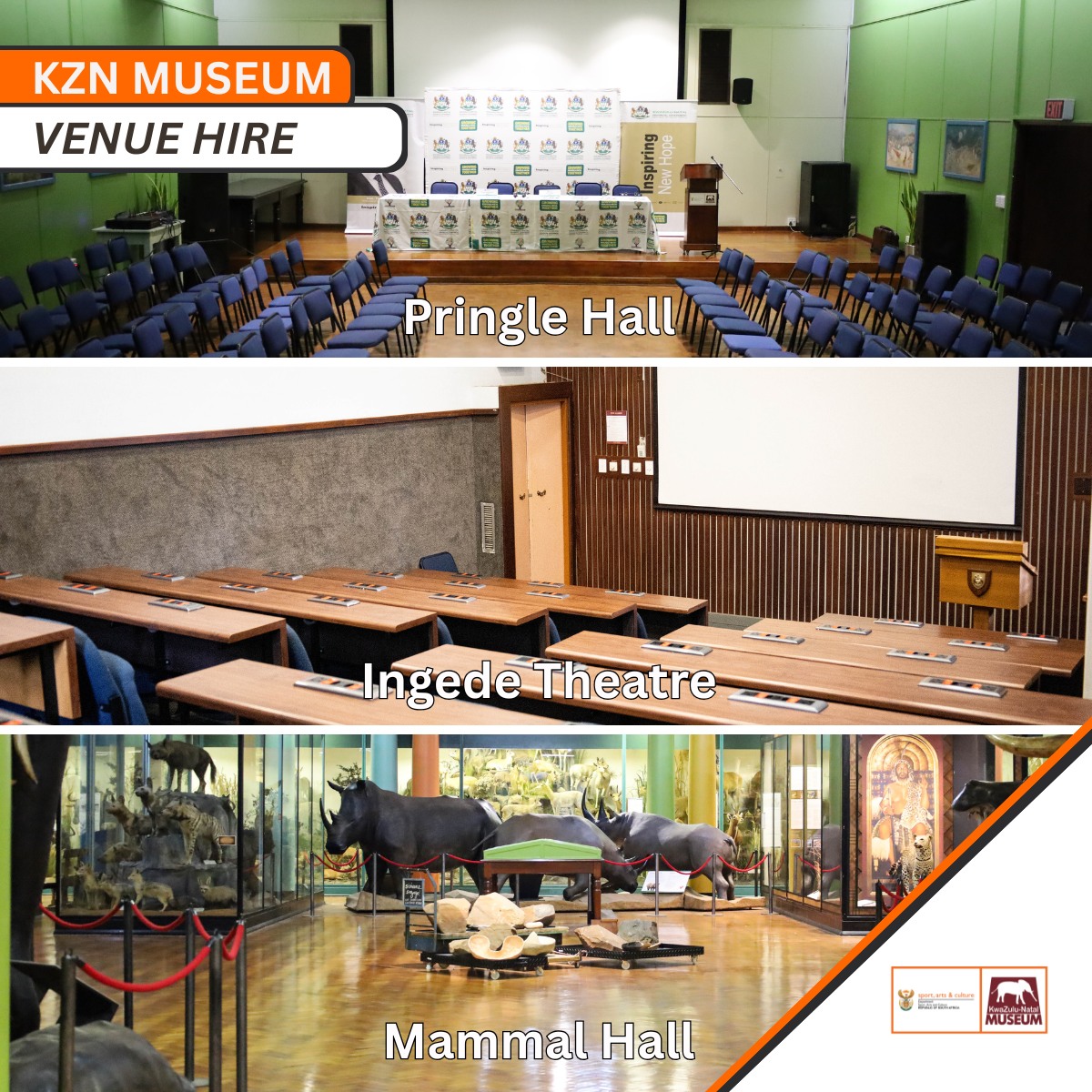
𝗣𝗹𝗲𝗮𝘀𝗲 𝗻𝗼𝘁𝗲 𝘁𝗵𝗮𝘁 𝘁𝗵𝗲 𝗠𝗮𝗺𝗺𝗮𝗹 𝗛𝗮𝗹𝗹 𝗮𝗻𝗱 𝗜𝗻𝘃𝗲𝗿𝘁𝗲𝗯𝗿𝗮𝘁𝗲 𝗚𝗮𝗹𝗹𝗲𝗿𝘆 𝘄𝗶𝗹𝗹 𝗯𝗲 𝗰𝗹𝗼𝘀𝗲𝗱 𝗼𝗳𝗳 𝘁𝗼 𝘁𝗵𝗲 𝗽𝘂𝗯𝗹𝗶𝗰 𝗳𝗿𝗼𝗺 𝘁𝗵𝗲 𝟭𝟬𝘁𝗵 𝗮𝗻𝗱 𝟭𝟭𝘁𝗵 𝗼𝗳 𝗡𝗼𝘃𝗲𝗺𝗯𝗲𝗿 𝗶𝗻 𝗽𝗿𝗲𝗽𝗮𝗿𝗮𝘁𝗶𝗼𝗻 𝗳𝗼𝗿 𝘁𝗵𝗲 𝘄𝗼𝗿𝗸 𝘁𝗼 𝗯𝗲 𝗱𝗼𝗻𝗲.
Apologies for any inconvenience.
er
Notice! The KwaZulu-Natal Museum will be closed from 𝗦𝗮𝘁𝘂𝗿𝗱𝗮𝘆, 𝟭𝟮 𝗡𝗼𝘃𝗲𝗺𝗯𝗲𝗿 𝟮𝟬𝟮𝟮 𝘁𝗼 𝗧𝘂𝗲𝘀𝗱𝗮𝘆 𝟮𝟮 𝗡𝗼𝘃𝗲𝗺𝗯𝗲𝗿 𝟮𝟬𝟮𝟮 due to refurbishment of the wooden floors in the ground floor area.
As a safety measure from the dust and fumes expected to be produced from the refurbishment of the wooden floors, the Museum will be closed to members of the public from the 12th to 22nd of November 2022 (inclusive of both days).
𝗣𝗹𝗲𝗮𝘀𝗲 𝗻𝗼𝘁𝗲 𝘁𝗵𝗮𝘁 𝘁𝗵𝗲 𝗠𝗮𝗺𝗺𝗮𝗹 𝗛𝗮𝗹𝗹 𝗮𝗻𝗱 𝗜𝗻𝘃𝗲𝗿𝘁𝗲𝗯𝗿𝗮𝘁𝗲 𝗚𝗮𝗹𝗹𝗲𝗿𝘆 𝘄𝗶𝗹𝗹 𝗯𝗲 𝗰𝗹𝗼𝘀𝗲𝗱 𝗼𝗳𝗳 𝘁𝗼 𝘁𝗵𝗲 𝗽𝘂𝗯𝗹𝗶𝗰 𝗳𝗿𝗼𝗺 𝘁𝗵𝗲 𝟭𝟬𝘁𝗵 𝗮𝗻𝗱 𝟭𝟭𝘁𝗵 𝗼𝗳 𝗡𝗼𝘃𝗲𝗺𝗯𝗲𝗿 𝗶𝗻 𝗽𝗿𝗲𝗽𝗮𝗿𝗮𝘁𝗶𝗼𝗻 𝗳𝗼𝗿 𝘁𝗵𝗲 𝘄𝗼𝗿𝗸 𝘁𝗼 𝗯𝗲 𝗱𝗼𝗻𝗲.
Apologies for any inconvenience.
Notice! The KwaZulu-Natal Museum will be closed from 𝗦𝗮𝘁𝘂𝗿𝗱𝗮𝘆, 𝟭𝟮 𝗡𝗼𝘃𝗲𝗺𝗯𝗲𝗿 𝟮𝟬𝟮𝟮 𝘁𝗼 𝗧𝘂𝗲𝘀𝗱𝗮𝘆 𝟮𝟮 𝗡𝗼𝘃𝗲𝗺𝗯𝗲𝗿 𝟮𝟬𝟮𝟮 due to refurbishment of the wooden floors in the ground floor area.
As a safety measure from the dust and fumes expected to be produced from the refurbishment of the wooden floors, the Museum will be closed to members of the public from the 12th to 22nd of November 2022 (inclusive of both days).
𝗣𝗹𝗲𝗮𝘀𝗲 𝗻𝗼𝘁𝗲 𝘁𝗵𝗮𝘁 𝘁𝗵𝗲 𝗠𝗮𝗺𝗺𝗮𝗹 𝗛𝗮𝗹𝗹 𝗮𝗻𝗱 𝗜𝗻𝘃𝗲𝗿𝘁𝗲𝗯𝗿𝗮𝘁𝗲 𝗚𝗮𝗹𝗹𝗲𝗿𝘆 𝘄𝗶𝗹𝗹 𝗯𝗲 𝗰𝗹𝗼𝘀𝗲𝗱 𝗼𝗳𝗳 𝘁𝗼 𝘁𝗵𝗲 𝗽𝘂𝗯𝗹𝗶𝗰 𝗳𝗿𝗼𝗺 𝘁𝗵𝗲 𝟭𝟬𝘁𝗵 𝗮𝗻𝗱 𝟭𝟭𝘁𝗵 𝗼𝗳 𝗡𝗼𝘃𝗲𝗺𝗯𝗲𝗿 𝗶𝗻 𝗽𝗿𝗲𝗽𝗮𝗿𝗮𝘁𝗶𝗼𝗻 𝗳𝗼𝗿 𝘁𝗵𝗲 𝘄𝗼𝗿𝗸 𝘁𝗼 𝗯𝗲 𝗱𝗼𝗻𝗲.
Apologies for any inconvenience.
Notice! The KwaZulu-Natal Museum will be closed from 𝗦𝗮𝘁𝘂𝗿𝗱𝗮𝘆, 𝟭𝟮 𝗡𝗼𝘃𝗲𝗺𝗯𝗲𝗿 𝟮𝟬𝟮𝟮 𝘁𝗼 𝗧𝘂𝗲𝘀𝗱𝗮𝘆 𝟮𝟮 𝗡𝗼𝘃𝗲𝗺𝗯𝗲𝗿 𝟮𝟬𝟮𝟮 due to refurbishment of the wooden floors in the ground floor area.
As a safety measure from the dust and fumes expected to be produced from the refurbishment of the wooden floors, the Museum will be closed to members of the public from the 12th to 22nd of November 2022 (inclusive of both days).
𝗣𝗹𝗲𝗮𝘀𝗲 𝗻𝗼𝘁𝗲 𝘁𝗵𝗮𝘁 𝘁𝗵𝗲 𝗠𝗮𝗺𝗺𝗮𝗹 𝗛𝗮𝗹𝗹 𝗮𝗻𝗱 𝗜𝗻𝘃𝗲𝗿𝘁𝗲𝗯𝗿𝗮𝘁𝗲 𝗚𝗮𝗹𝗹𝗲𝗿𝘆 𝘄𝗶𝗹𝗹 𝗯𝗲 𝗰𝗹𝗼𝘀𝗲𝗱 𝗼𝗳𝗳 𝘁𝗼 𝘁𝗵𝗲 𝗽𝘂𝗯𝗹𝗶𝗰 𝗳𝗿𝗼𝗺 𝘁𝗵𝗲 𝟭𝟬𝘁𝗵 𝗮𝗻𝗱 𝟭𝟭𝘁𝗵 𝗼𝗳 𝗡𝗼𝘃𝗲𝗺𝗯𝗲𝗿 𝗶𝗻 𝗽𝗿𝗲𝗽𝗮𝗿𝗮𝘁𝗶𝗼𝗻 𝗳𝗼𝗿 𝘁𝗵𝗲 𝘄𝗼𝗿𝗸 𝘁𝗼 𝗯𝗲 𝗱𝗼𝗻𝗲.
Apologies for any inconvenience.
Notice! The KwaZulu-Natal Museum will be closed from 𝗦𝗮𝘁𝘂𝗿𝗱𝗮𝘆, 𝟭𝟮 𝗡𝗼𝘃𝗲𝗺𝗯𝗲𝗿 𝟮𝟬𝟮𝟮 𝘁𝗼 𝗧𝘂𝗲𝘀𝗱𝗮𝘆 𝟮𝟮 𝗡𝗼𝘃𝗲𝗺𝗯𝗲𝗿 𝟮𝟬𝟮𝟮 due to refurbishment of the wooden floors in the ground floor area.
As a safety measure from the dust and fumes expected to be produced from the refurbishment of the wooden floors, the Museum will be closed to members of the public from the 12th to 22nd of November 2022 (inclusive of both days).
𝗣𝗹𝗲𝗮𝘀𝗲 𝗻𝗼𝘁𝗲 𝘁𝗵𝗮𝘁 𝘁𝗵𝗲 𝗠𝗮𝗺𝗺𝗮𝗹 𝗛𝗮𝗹𝗹 𝗮𝗻𝗱 𝗜𝗻𝘃𝗲𝗿𝘁𝗲𝗯𝗿𝗮𝘁𝗲 𝗚𝗮𝗹𝗹𝗲𝗿𝘆 𝘄𝗶𝗹𝗹 𝗯𝗲 𝗰𝗹𝗼𝘀𝗲𝗱 𝗼𝗳𝗳 𝘁𝗼 𝘁𝗵𝗲 𝗽𝘂𝗯𝗹𝗶𝗰 𝗳𝗿𝗼𝗺 𝘁𝗵𝗲 𝟭𝟬𝘁𝗵 𝗮𝗻𝗱 𝟭𝟭𝘁𝗵 𝗼𝗳 𝗡𝗼𝘃𝗲𝗺𝗯𝗲𝗿 𝗶𝗻 𝗽𝗿𝗲𝗽𝗮𝗿𝗮𝘁𝗶𝗼𝗻 𝗳𝗼𝗿 𝘁𝗵𝗲 𝘄𝗼𝗿𝗸 𝘁𝗼 𝗯𝗲 𝗱𝗼𝗻𝗲.
Apologies for any inconvenience.
Heading layThe KwaZulu-Natal Museum will be closed from 𝗦𝗮𝘁𝘂𝗿𝗱𝗮𝘆, 𝟭𝟮 𝗡𝗼𝘃𝗲𝗺𝗯𝗲𝗿 𝟮𝟬𝟮𝟮 𝘁𝗼 𝗧𝘂𝗲𝘀𝗱𝗮𝘆 𝟮𝟮 𝗡𝗼𝘃𝗲𝗺𝗯𝗲𝗿 𝟮𝟬𝟮𝟮 due to refurbishment of the wooden floors in the ground floor area.
As a safety measure from the dust and fumes expected to be produced from the refurbishment of the wooden floors, the Museum will be closed to members of the public from the 12th to the 22nd of November 2022 (inclusive of both days).
𝗣𝗹𝗲𝗮𝘀𝗲 𝗻𝗼𝘁𝗲 𝘁𝗵𝗮𝘁 𝘁𝗵𝗲 𝗠𝗮𝗺𝗺𝗮𝗹 𝗛𝗮𝗹𝗹 𝗮𝗻𝗱 𝗜𝗻𝘃𝗲𝗿𝘁𝗲𝗯𝗿𝗮𝘁𝗲 𝗚𝗮𝗹𝗹𝗲𝗿𝘆 𝘄𝗶𝗹𝗹 𝗯𝗲 𝗰𝗹𝗼𝘀𝗲𝗱 𝗼𝗳𝗳 𝘁𝗼 𝘁𝗵𝗲 𝗽𝘂𝗯𝗹𝗶𝗰 𝗳𝗿𝗼𝗺 𝘁𝗵𝗲 𝟭𝟬𝘁𝗵 𝗮𝗻𝗱 𝟭𝟭𝘁𝗵 𝗼𝗳 𝗡𝗼𝘃𝗲𝗺𝗯𝗲𝗿 𝗶𝗻 𝗽𝗿𝗲𝗽𝗮𝗿𝗮𝘁𝗶𝗼𝗻 𝗳𝗼𝗿 𝘁𝗵𝗲 𝘄𝗼𝗿𝗸 𝘁𝗼 𝗯𝗲 𝗱𝗼𝗻𝗲.
Apologies for any inconvenience.
er
Notice! The KwaZulu-Natal Museum will be closed from 𝗦𝗮𝘁𝘂𝗿𝗱𝗮𝘆, 𝟭𝟮 𝗡𝗼𝘃𝗲𝗺𝗯𝗲𝗿 𝟮𝟬𝟮𝟮 𝘁𝗼 𝗧𝘂𝗲𝘀𝗱𝗮𝘆 𝟮𝟮 𝗡𝗼𝘃𝗲𝗺𝗯𝗲𝗿 𝟮𝟬𝟮𝟮 due to refurbishment of the wooden floors in the ground floor area.
As a safety measure from the dust and fumes expected to be produced from the refurbishment of the wooden floors, the Museum will be closed to members of the public from the 12th to 22nd of November 2022 (inclusive of both days).
𝗣𝗹𝗲𝗮𝘀𝗲 𝗻𝗼𝘁𝗲 𝘁𝗵𝗮𝘁 𝘁𝗵𝗲 𝗠𝗮𝗺𝗺𝗮𝗹 𝗛𝗮𝗹𝗹 𝗮𝗻𝗱 𝗜𝗻𝘃𝗲𝗿𝘁𝗲𝗯𝗿𝗮𝘁𝗲 𝗚𝗮𝗹𝗹𝗲𝗿𝘆 𝘄𝗶𝗹𝗹 𝗯𝗲 𝗰𝗹𝗼𝘀𝗲𝗱 𝗼𝗳𝗳 𝘁𝗼 𝘁𝗵𝗲 𝗽𝘂𝗯𝗹𝗶𝗰 𝗳𝗿𝗼𝗺 𝘁𝗵𝗲 𝟭𝟬𝘁𝗵 𝗮𝗻𝗱 𝟭𝟭𝘁𝗵 𝗼𝗳 𝗡𝗼𝘃𝗲𝗺𝗯𝗲𝗿 𝗶𝗻 𝗽𝗿𝗲𝗽𝗮𝗿𝗮𝘁𝗶𝗼𝗻 𝗳𝗼𝗿 𝘁𝗵𝗲 𝘄𝗼𝗿𝗸 𝘁𝗼 𝗯𝗲 𝗱𝗼𝗻𝗲.
Apologies for any inconvenience.
Notice! The KwaZulu-Natal Museum will be closed from 𝗦𝗮𝘁𝘂𝗿𝗱𝗮𝘆, 𝟭𝟮 𝗡𝗼𝘃𝗲𝗺𝗯𝗲𝗿 𝟮𝟬𝟮𝟮 𝘁𝗼 𝗧𝘂𝗲𝘀𝗱𝗮𝘆 𝟮𝟮 𝗡𝗼𝘃𝗲𝗺𝗯𝗲𝗿 𝟮𝟬𝟮𝟮 due to refurbishment of the wooden floors in the ground floor area.
As a safety measure from the dust and fumes expected to be produced from the refurbishment of the wooden floors, the Museum will be closed to members of the public from the 12th to 22nd of November 2022 (inclusive of both days).
𝗣𝗹𝗲𝗮𝘀𝗲 𝗻𝗼𝘁𝗲 𝘁𝗵𝗮𝘁 𝘁𝗵𝗲 𝗠𝗮𝗺𝗺𝗮𝗹 𝗛𝗮𝗹𝗹 𝗮𝗻𝗱 𝗜𝗻𝘃𝗲𝗿𝘁𝗲𝗯𝗿𝗮𝘁𝗲 𝗚𝗮𝗹𝗹𝗲𝗿𝘆 𝘄𝗶𝗹𝗹 𝗯𝗲 𝗰𝗹𝗼𝘀𝗲𝗱 𝗼𝗳𝗳 𝘁𝗼 𝘁𝗵𝗲 𝗽𝘂𝗯𝗹𝗶𝗰 𝗳𝗿𝗼𝗺 𝘁𝗵𝗲 𝟭𝟬𝘁𝗵 𝗮𝗻𝗱 𝟭𝟭𝘁𝗵 𝗼𝗳 𝗡𝗼𝘃𝗲𝗺𝗯𝗲𝗿 𝗶𝗻 𝗽𝗿𝗲𝗽𝗮𝗿𝗮𝘁𝗶𝗼𝗻 𝗳𝗼𝗿 𝘁𝗵𝗲 𝘄𝗼𝗿𝗸 𝘁𝗼 𝗯𝗲 𝗱𝗼𝗻𝗲.
Apologies for any inconvenience.
Notice! The KwaZulu-Natal Museum will be closed from 𝗦𝗮𝘁𝘂𝗿𝗱𝗮𝘆, 𝟭𝟮 𝗡𝗼𝘃𝗲𝗺𝗯𝗲𝗿 𝟮𝟬𝟮𝟮 𝘁𝗼 𝗧𝘂𝗲𝘀𝗱𝗮𝘆 𝟮𝟮 𝗡𝗼𝘃𝗲𝗺𝗯𝗲𝗿 𝟮𝟬𝟮𝟮 due to refurbishment of the wooden floors in the ground floor area.
As a safety measure from the dust and fumes expected to be produced from the refurbishment of the wooden floors, the Museum will be closed to members of the public from the 12th to 22nd of November 2022 (inclusive of both days).
𝗣𝗹𝗲𝗮𝘀𝗲 𝗻𝗼𝘁𝗲 𝘁𝗵𝗮𝘁 𝘁𝗵𝗲 𝗠𝗮𝗺𝗺𝗮𝗹 𝗛𝗮𝗹𝗹 𝗮𝗻𝗱 𝗜𝗻𝘃𝗲𝗿𝘁𝗲𝗯𝗿𝗮𝘁𝗲 𝗚𝗮𝗹𝗹𝗲𝗿𝘆 𝘄𝗶𝗹𝗹 𝗯𝗲 𝗰𝗹𝗼𝘀𝗲𝗱 𝗼𝗳𝗳 𝘁𝗼 𝘁𝗵𝗲 𝗽𝘂𝗯𝗹𝗶𝗰 𝗳𝗿𝗼𝗺 𝘁𝗵𝗲 𝟭𝟬𝘁𝗵 𝗮𝗻𝗱 𝟭𝟭𝘁𝗵 𝗼𝗳 𝗡𝗼𝘃𝗲𝗺𝗯𝗲𝗿 𝗶𝗻 𝗽𝗿𝗲𝗽𝗮𝗿𝗮𝘁𝗶𝗼𝗻 𝗳𝗼𝗿 𝘁𝗵𝗲 𝘄𝗼𝗿𝗸 𝘁𝗼 𝗯𝗲 𝗱𝗼𝗻𝗲.
Apologies for any inconvenience.
Notice! The KwaZulu-Natal Museum will be closed from 𝗦𝗮𝘁𝘂𝗿𝗱𝗮𝘆, 𝟭𝟮 𝗡𝗼𝘃𝗲𝗺𝗯𝗲𝗿 𝟮𝟬𝟮𝟮 𝘁𝗼 𝗧𝘂𝗲𝘀𝗱𝗮𝘆 𝟮𝟮 𝗡𝗼𝘃𝗲𝗺𝗯𝗲𝗿 𝟮𝟬𝟮𝟮 due to refurbishment of the wooden floors in the ground floor area.
As a safety measure from the dust and fumes expected to be produced from the refurbishment of the wooden floors, the Museum will be closed to members of the public from the 12th to 22nd of November 2022 (inclusive of both days).
𝗣𝗹𝗲𝗮𝘀𝗲 𝗻𝗼𝘁𝗲 𝘁𝗵𝗮𝘁 𝘁𝗵𝗲 𝗠𝗮𝗺𝗺𝗮𝗹 𝗛𝗮𝗹𝗹 𝗮𝗻𝗱 𝗜𝗻𝘃𝗲𝗿𝘁𝗲𝗯𝗿𝗮𝘁𝗲 𝗚𝗮𝗹𝗹𝗲𝗿𝘆 𝘄𝗶𝗹𝗹 𝗯𝗲 𝗰𝗹𝗼𝘀𝗲𝗱 𝗼𝗳𝗳 𝘁𝗼 𝘁𝗵𝗲 𝗽𝘂𝗯𝗹𝗶𝗰 𝗳𝗿𝗼𝗺 𝘁𝗵𝗲 𝟭𝟬𝘁𝗵 𝗮𝗻𝗱 𝟭𝟭𝘁𝗵 𝗼𝗳 𝗡𝗼𝘃𝗲𝗺𝗯𝗲𝗿 𝗶𝗻 𝗽𝗿𝗲𝗽𝗮𝗿𝗮𝘁𝗶𝗼𝗻 𝗳𝗼𝗿 𝘁𝗵𝗲 𝘄𝗼𝗿𝗸 𝘁𝗼 𝗯𝗲 𝗱𝗼𝗻𝗲.
Apologies for any inconvenience.
Notice! The KwaZulu-Natal Museum will be closed from 𝗦𝗮𝘁𝘂𝗿𝗱𝗮𝘆, 𝟭𝟮 𝗡𝗼𝘃𝗲𝗺𝗯𝗲𝗿 𝟮𝟬𝟮𝟮 𝘁𝗼 𝗧𝘂𝗲𝘀𝗱𝗮𝘆 𝟮𝟮 𝗡𝗼𝘃𝗲𝗺𝗯𝗲𝗿 𝟮𝟬𝟮𝟮 due to refurbishment of the wooden floors in the ground floor area.
As a safety measure from the dust and fumes expected to be produced from the refurbishment of the wooden floors, the Museum will be closed to members of the public from the 12th to 22nd of November 2022 (inclusive of both days).
𝗣𝗹𝗲𝗮𝘀𝗲 𝗻𝗼𝘁𝗲 𝘁𝗵𝗮𝘁 𝘁𝗵𝗲 𝗠𝗮𝗺𝗺𝗮𝗹 𝗛𝗮𝗹𝗹 𝗮𝗻𝗱 𝗜𝗻𝘃𝗲𝗿𝘁𝗲𝗯𝗿𝗮𝘁𝗲 𝗚𝗮𝗹𝗹𝗲𝗿𝘆 𝘄𝗶𝗹𝗹 𝗯𝗲 𝗰𝗹𝗼𝘀𝗲𝗱 𝗼𝗳𝗳 𝘁𝗼 𝘁𝗵𝗲 𝗽𝘂𝗯𝗹𝗶𝗰 𝗳𝗿𝗼𝗺 𝘁𝗵𝗲 𝟭𝟬𝘁𝗵 𝗮𝗻𝗱 𝟭𝟭𝘁𝗵 𝗼𝗳 𝗡𝗼𝘃𝗲𝗺𝗯𝗲𝗿 𝗶𝗻 𝗽𝗿𝗲𝗽𝗮𝗿𝗮𝘁𝗶𝗼𝗻 𝗳𝗼𝗿 𝘁𝗵𝗲 𝘄𝗼𝗿𝗸 𝘁𝗼 𝗯𝗲 𝗱𝗼𝗻𝗲.
Apologies for any inconvenience.
Notice! The KwaZulu-Natal Museum will be closed from 𝗦𝗮𝘁𝘂𝗿𝗱𝗮𝘆, 𝟭𝟮 𝗡𝗼𝘃𝗲𝗺𝗯𝗲𝗿 𝟮𝟬𝟮𝟮 𝘁𝗼 𝗧𝘂𝗲𝘀𝗱𝗮𝘆 𝟮𝟮 𝗡𝗼𝘃𝗲𝗺𝗯𝗲𝗿 𝟮𝟬𝟮𝟮 due to refurbishment of the wooden floors in the ground floor area.
As a safety measure from the dust and fumes expected to be produced from the refurbishment of the wooden floors, the Museum will be closed to members of the public from the 12th to 22nd of November 2022 (inclusive of both days).
𝗣𝗹𝗲𝗮𝘀𝗲 𝗻𝗼𝘁𝗲 𝘁𝗵𝗮𝘁 𝘁𝗵𝗲 𝗠𝗮𝗺𝗺𝗮𝗹 𝗛𝗮𝗹𝗹 𝗮𝗻𝗱 𝗜𝗻𝘃𝗲𝗿𝘁𝗲𝗯𝗿𝗮𝘁𝗲 𝗚𝗮𝗹𝗹𝗲𝗿𝘆 𝘄𝗶𝗹𝗹 𝗯𝗲 𝗰𝗹𝗼𝘀𝗲𝗱 𝗼𝗳𝗳 𝘁𝗼 𝘁𝗵𝗲 𝗽𝘂𝗯𝗹𝗶𝗰 𝗳𝗿𝗼𝗺 𝘁𝗵𝗲 𝟭𝟬𝘁𝗵 𝗮𝗻𝗱 𝟭𝟭𝘁𝗵 𝗼𝗳 𝗡𝗼𝘃𝗲𝗺𝗯𝗲𝗿 𝗶𝗻 𝗽𝗿𝗲𝗽𝗮𝗿𝗮𝘁𝗶𝗼𝗻 𝗳𝗼𝗿 𝘁𝗵𝗲 𝘄𝗼𝗿𝗸 𝘁𝗼 𝗯𝗲 𝗱𝗼𝗻𝗲.
Apologies for any inconvenience.
Heading layThe KwaZulu-Natal Museum will be closed from 𝗦𝗮𝘁𝘂𝗿𝗱𝗮𝘆, 𝟭𝟮 𝗡𝗼𝘃𝗲𝗺𝗯𝗲𝗿 𝟮𝟬𝟮𝟮 𝘁𝗼 𝗧𝘂𝗲𝘀𝗱𝗮𝘆 𝟮𝟮 𝗡𝗼𝘃𝗲𝗺𝗯𝗲𝗿 𝟮𝟬𝟮𝟮 due to refurbishment of the wooden floors in the ground floor area.
As a safety measure from the dust and fumes expected to be produced from the refurbishment of the wooden floors, the Museum will be closed to members of the public from the 12th to the 22nd of November 2022 (inclusive of both days).
𝗣𝗹𝗲𝗮𝘀𝗲 𝗻𝗼𝘁𝗲 𝘁𝗵𝗮𝘁 𝘁𝗵𝗲 𝗠𝗮𝗺𝗺𝗮𝗹 𝗛𝗮𝗹𝗹 𝗮𝗻𝗱 𝗜𝗻𝘃𝗲𝗿𝘁𝗲𝗯𝗿𝗮𝘁𝗲 𝗚𝗮𝗹𝗹𝗲𝗿𝘆 𝘄𝗶𝗹𝗹 𝗯𝗲 𝗰𝗹𝗼𝘀𝗲𝗱 𝗼𝗳𝗳 𝘁𝗼 𝘁𝗵𝗲 𝗽𝘂𝗯𝗹𝗶𝗰 𝗳𝗿𝗼𝗺 𝘁𝗵𝗲 𝟭𝟬𝘁𝗵 𝗮𝗻𝗱 𝟭𝟭𝘁𝗵 𝗼𝗳 𝗡𝗼𝘃𝗲𝗺𝗯𝗲𝗿 𝗶𝗻 𝗽𝗿𝗲𝗽𝗮𝗿𝗮𝘁𝗶𝗼𝗻 𝗳𝗼𝗿 𝘁𝗵𝗲 𝘄𝗼𝗿𝗸 𝘁𝗼 𝗯𝗲 𝗱𝗼𝗻𝗲.
Apologies for any inconvenience.
er
Notice! The KwaZulu-Natal Museum will be closed from 𝗦𝗮𝘁𝘂𝗿𝗱𝗮𝘆, 𝟭𝟮 𝗡𝗼𝘃𝗲𝗺𝗯𝗲𝗿 𝟮𝟬𝟮𝟮 𝘁𝗼 𝗧𝘂𝗲𝘀𝗱𝗮𝘆 𝟮𝟮 𝗡𝗼𝘃𝗲𝗺𝗯𝗲𝗿 𝟮𝟬𝟮𝟮 due to refurbishment of the wooden floors in the ground floor area.
As a safety measure from the dust and fumes expected to be produced from the refurbishment of the wooden floors, the Museum will be closed to members of the public from the 12th to 22nd of November 2022 (inclusive of both days).
𝗣𝗹𝗲𝗮𝘀𝗲 𝗻𝗼𝘁𝗲 𝘁𝗵𝗮𝘁 𝘁𝗵𝗲 𝗠𝗮𝗺𝗺𝗮𝗹 𝗛𝗮𝗹𝗹 𝗮𝗻𝗱 𝗜𝗻𝘃𝗲𝗿𝘁𝗲𝗯𝗿𝗮𝘁𝗲 𝗚𝗮𝗹𝗹𝗲𝗿𝘆 𝘄𝗶𝗹𝗹 𝗯𝗲 𝗰𝗹𝗼𝘀𝗲𝗱 𝗼𝗳𝗳 𝘁𝗼 𝘁𝗵𝗲 𝗽𝘂𝗯𝗹𝗶𝗰 𝗳𝗿𝗼𝗺 𝘁𝗵𝗲 𝟭𝟬𝘁𝗵 𝗮𝗻𝗱 𝟭𝟭𝘁𝗵 𝗼𝗳 𝗡𝗼𝘃𝗲𝗺𝗯𝗲𝗿 𝗶𝗻 𝗽𝗿𝗲𝗽𝗮𝗿𝗮𝘁𝗶𝗼𝗻 𝗳𝗼𝗿 𝘁𝗵𝗲 𝘄𝗼𝗿𝗸 𝘁𝗼 𝗯𝗲 𝗱𝗼𝗻𝗲.
Apologies for any inconvenience.
Notice! The KwaZulu-Natal Museum will be closed from 𝗦𝗮𝘁𝘂𝗿𝗱𝗮𝘆, 𝟭𝟮 𝗡𝗼𝘃𝗲𝗺𝗯𝗲𝗿 𝟮𝟬𝟮𝟮 𝘁𝗼 𝗧𝘂𝗲𝘀𝗱𝗮𝘆 𝟮𝟮 𝗡𝗼𝘃𝗲𝗺𝗯𝗲𝗿 𝟮𝟬𝟮𝟮 due to refurbishment of the wooden floors in the ground floor area.
As a safety measure from the dust and fumes expected to be produced from the refurbishment of the wooden floors, the Museum will be closed to members of the public from the 12th to 22nd of November 2022 (inclusive of both days).
𝗣𝗹𝗲𝗮𝘀𝗲 𝗻𝗼𝘁𝗲 𝘁𝗵𝗮𝘁 𝘁𝗵𝗲 𝗠𝗮𝗺𝗺𝗮𝗹 𝗛𝗮𝗹𝗹 𝗮𝗻𝗱 𝗜𝗻𝘃𝗲𝗿𝘁𝗲𝗯𝗿𝗮𝘁𝗲 𝗚𝗮𝗹𝗹𝗲𝗿𝘆 𝘄𝗶𝗹𝗹 𝗯𝗲 𝗰𝗹𝗼𝘀𝗲𝗱 𝗼𝗳𝗳 𝘁𝗼 𝘁𝗵𝗲 𝗽𝘂𝗯𝗹𝗶𝗰 𝗳𝗿𝗼𝗺 𝘁𝗵𝗲 𝟭𝟬𝘁𝗵 𝗮𝗻𝗱 𝟭𝟭𝘁𝗵 𝗼𝗳 𝗡𝗼𝘃𝗲𝗺𝗯𝗲𝗿 𝗶𝗻 𝗽𝗿𝗲𝗽𝗮𝗿𝗮𝘁𝗶𝗼𝗻 𝗳𝗼𝗿 𝘁𝗵𝗲 𝘄𝗼𝗿𝗸 𝘁𝗼 𝗯𝗲 𝗱𝗼𝗻𝗲.
Apologies for any inconvenience.
Heading layThe KwaZulu-Natal Museum will be closed from 𝗦𝗮𝘁𝘂𝗿𝗱𝗮𝘆, 𝟭𝟮 𝗡𝗼𝘃𝗲𝗺𝗯𝗲𝗿 𝟮𝟬𝟮𝟮 𝘁𝗼 𝗧𝘂𝗲𝘀𝗱𝗮𝘆 𝟮𝟮 𝗡𝗼𝘃𝗲𝗺𝗯𝗲𝗿 𝟮𝟬𝟮𝟮 due to refurbishment of the wooden floors in the ground floor area.
As a safety measure from the dust and fumes expected to be produced from the refurbishment of the wooden floors, the Museum will be closed to members of the public from the 12th to the 22nd of November 2022 (inclusive of both days).
𝗣𝗹𝗲𝗮𝘀𝗲 𝗻𝗼𝘁𝗲 𝘁𝗵𝗮𝘁 𝘁𝗵𝗲 𝗠𝗮𝗺𝗺𝗮𝗹 𝗛𝗮𝗹𝗹 𝗮𝗻𝗱 𝗜𝗻𝘃𝗲𝗿𝘁𝗲𝗯𝗿𝗮𝘁𝗲 𝗚𝗮𝗹𝗹𝗲𝗿𝘆 𝘄𝗶𝗹𝗹 𝗯𝗲 𝗰𝗹𝗼𝘀𝗲𝗱 𝗼𝗳𝗳 𝘁𝗼 𝘁𝗵𝗲 𝗽𝘂𝗯𝗹𝗶𝗰 𝗳𝗿𝗼𝗺 𝘁𝗵𝗲 𝟭𝟬𝘁𝗵 𝗮𝗻𝗱 𝟭𝟭𝘁𝗵 𝗼𝗳 𝗡𝗼𝘃𝗲𝗺𝗯𝗲𝗿 𝗶𝗻 𝗽𝗿𝗲𝗽𝗮𝗿𝗮𝘁𝗶𝗼𝗻 𝗳𝗼𝗿 𝘁𝗵𝗲 𝘄𝗼𝗿𝗸 𝘁𝗼 𝗯𝗲 𝗱𝗼𝗻𝗲.
Apologies for any inconvenience.
er
Notice! The KwaZulu-Natal Museum will be closed from 𝗦𝗮𝘁𝘂𝗿𝗱𝗮𝘆, 𝟭𝟮 𝗡𝗼𝘃𝗲𝗺𝗯𝗲𝗿 𝟮𝟬𝟮𝟮 𝘁𝗼 𝗧𝘂𝗲𝘀𝗱𝗮𝘆 𝟮𝟮 𝗡𝗼𝘃𝗲𝗺𝗯𝗲𝗿 𝟮𝟬𝟮𝟮 due to refurbishment of the wooden floors in the ground floor area.
As a safety measure from the dust and fumes expected to be produced from the refurbishment of the wooden floors, the Museum will be closed to members of the public from the 12th to 22nd of November 2022 (inclusive of both days).
𝗣𝗹𝗲𝗮𝘀𝗲 𝗻𝗼𝘁𝗲 𝘁𝗵𝗮𝘁 𝘁𝗵𝗲 𝗠𝗮𝗺𝗺𝗮𝗹 𝗛𝗮𝗹𝗹 𝗮𝗻𝗱 𝗜𝗻𝘃𝗲𝗿𝘁𝗲𝗯𝗿𝗮𝘁𝗲 𝗚𝗮𝗹𝗹𝗲𝗿𝘆 𝘄𝗶𝗹𝗹 𝗯𝗲 𝗰𝗹𝗼𝘀𝗲𝗱 𝗼𝗳𝗳 𝘁𝗼 𝘁𝗵𝗲 𝗽𝘂𝗯𝗹𝗶𝗰 𝗳𝗿𝗼𝗺 𝘁𝗵𝗲 𝟭𝟬𝘁𝗵 𝗮𝗻𝗱 𝟭𝟭𝘁𝗵 𝗼𝗳 𝗡𝗼𝘃𝗲𝗺𝗯𝗲𝗿 𝗶𝗻 𝗽𝗿𝗲𝗽𝗮𝗿𝗮𝘁𝗶𝗼𝗻 𝗳𝗼𝗿 𝘁𝗵𝗲 𝘄𝗼𝗿𝗸 𝘁𝗼 𝗯𝗲 𝗱𝗼𝗻𝗲.
Apologies for any inconvenience.
Notice! The KwaZulu-Natal Museum will be closed from 𝗦𝗮𝘁𝘂𝗿𝗱𝗮𝘆, 𝟭𝟮 𝗡𝗼𝘃𝗲𝗺𝗯𝗲𝗿 𝟮𝟬𝟮𝟮 𝘁𝗼 𝗧𝘂𝗲𝘀𝗱𝗮𝘆 𝟮𝟮 𝗡𝗼𝘃𝗲𝗺𝗯𝗲𝗿 𝟮𝟬𝟮𝟮 due to refurbishment of the wooden floors in the ground floor area.
As a safety measure from the dust and fumes expected to be produced from the refurbishment of the wooden floors, the Museum will be closed to members of the public from the 12th to 22nd of November 2022 (inclusive of both days).
𝗣𝗹𝗲𝗮𝘀𝗲 𝗻𝗼𝘁𝗲 𝘁𝗵𝗮𝘁 𝘁𝗵𝗲 𝗠𝗮𝗺𝗺𝗮𝗹 𝗛𝗮𝗹𝗹 𝗮𝗻𝗱 𝗜𝗻𝘃𝗲𝗿𝘁𝗲𝗯𝗿𝗮𝘁𝗲 𝗚𝗮𝗹𝗹𝗲𝗿𝘆 𝘄𝗶𝗹𝗹 𝗯𝗲 𝗰𝗹𝗼𝘀𝗲𝗱 𝗼𝗳𝗳 𝘁𝗼 𝘁𝗵𝗲 𝗽𝘂𝗯𝗹𝗶𝗰 𝗳𝗿𝗼𝗺 𝘁𝗵𝗲 𝟭𝟬𝘁𝗵 𝗮𝗻𝗱 𝟭𝟭𝘁𝗵 𝗼𝗳 𝗡𝗼𝘃𝗲𝗺𝗯𝗲𝗿 𝗶𝗻 𝗽𝗿𝗲𝗽𝗮𝗿𝗮𝘁𝗶𝗼𝗻 𝗳𝗼𝗿 𝘁𝗵𝗲 𝘄𝗼𝗿𝗸 𝘁𝗼 𝗯𝗲 𝗱𝗼𝗻𝗲.
Apologies for any inconvenience.
Heading layThe KwaZulu-Natal Museum will be closed from 𝗦𝗮𝘁𝘂𝗿𝗱𝗮𝘆, 𝟭𝟮 𝗡𝗼𝘃𝗲𝗺𝗯𝗲𝗿 𝟮𝟬𝟮𝟮 𝘁𝗼 𝗧𝘂𝗲𝘀𝗱𝗮𝘆 𝟮𝟮 𝗡𝗼𝘃𝗲𝗺𝗯𝗲𝗿 𝟮𝟬𝟮𝟮 due to refurbishment of the wooden floors in the ground floor area.
As a safety measure from the dust and fumes expected to be produced from the refurbishment of the wooden floors, the Museum will be closed to members of the public from the 12th to the 22nd of November 2022 (inclusive of both days).
𝗣𝗹𝗲𝗮𝘀𝗲 𝗻𝗼𝘁𝗲 𝘁𝗵𝗮𝘁 𝘁𝗵𝗲 𝗠𝗮𝗺𝗺𝗮𝗹 𝗛𝗮𝗹𝗹 𝗮𝗻𝗱 𝗜𝗻𝘃𝗲𝗿𝘁𝗲𝗯𝗿𝗮𝘁𝗲 𝗚𝗮𝗹𝗹𝗲𝗿𝘆 𝘄𝗶𝗹𝗹 𝗯𝗲 𝗰𝗹𝗼𝘀𝗲𝗱 𝗼𝗳𝗳 𝘁𝗼 𝘁𝗵𝗲 𝗽𝘂𝗯𝗹𝗶𝗰 𝗳𝗿𝗼𝗺 𝘁𝗵𝗲 𝟭𝟬𝘁𝗵 𝗮𝗻𝗱 𝟭𝟭𝘁𝗵 𝗼𝗳 𝗡𝗼𝘃𝗲𝗺𝗯𝗲𝗿 𝗶𝗻 𝗽𝗿𝗲𝗽𝗮𝗿𝗮𝘁𝗶𝗼𝗻 𝗳𝗼𝗿 𝘁𝗵𝗲 𝘄𝗼𝗿𝗸 𝘁𝗼 𝗯𝗲 𝗱𝗼𝗻𝗲.
Apologies for any inconvenience.
er
Notice! The KwaZulu-Natal Museum will be closed from 𝗦𝗮𝘁𝘂𝗿𝗱𝗮𝘆, 𝟭𝟮 𝗡𝗼𝘃𝗲𝗺𝗯𝗲𝗿 𝟮𝟬𝟮𝟮 𝘁𝗼 𝗧𝘂𝗲𝘀𝗱𝗮𝘆 𝟮𝟮 𝗡𝗼𝘃𝗲𝗺𝗯𝗲𝗿 𝟮𝟬𝟮𝟮 due to refurbishment of the wooden floors in the ground floor area.
As a safety measure from the dust and fumes expected to be produced from the refurbishment of the wooden floors, the Museum will be closed to members of the public from the 12th to 22nd of November 2022 (inclusive of both days).
𝗣𝗹𝗲𝗮𝘀𝗲 𝗻𝗼𝘁𝗲 𝘁𝗵𝗮𝘁 𝘁𝗵𝗲 𝗠𝗮𝗺𝗺𝗮𝗹 𝗛𝗮𝗹𝗹 𝗮𝗻𝗱 𝗜𝗻𝘃𝗲𝗿𝘁𝗲𝗯𝗿𝗮𝘁𝗲 𝗚𝗮𝗹𝗹𝗲𝗿𝘆 𝘄𝗶𝗹𝗹 𝗯𝗲 𝗰𝗹𝗼𝘀𝗲𝗱 𝗼𝗳𝗳 𝘁𝗼 𝘁𝗵𝗲 𝗽𝘂𝗯𝗹𝗶𝗰 𝗳𝗿𝗼𝗺 𝘁𝗵𝗲 𝟭𝟬𝘁𝗵 𝗮𝗻𝗱 𝟭𝟭𝘁𝗵 𝗼𝗳 𝗡𝗼𝘃𝗲𝗺𝗯𝗲𝗿 𝗶𝗻 𝗽𝗿𝗲𝗽𝗮𝗿𝗮𝘁𝗶𝗼𝗻 𝗳𝗼𝗿 𝘁𝗵𝗲 𝘄𝗼𝗿𝗸 𝘁𝗼 𝗯𝗲 𝗱𝗼𝗻𝗲.
Apologies for any inconvenience.
Notice! The KwaZulu-Natal Museum will be closed from 𝗦𝗮𝘁𝘂𝗿𝗱𝗮𝘆, 𝟭𝟮 𝗡𝗼𝘃𝗲𝗺𝗯𝗲𝗿 𝟮𝟬𝟮𝟮 𝘁𝗼 𝗧𝘂𝗲𝘀𝗱𝗮𝘆 𝟮𝟮 𝗡𝗼𝘃𝗲𝗺𝗯𝗲𝗿 𝟮𝟬𝟮𝟮 due to refurbishment of the wooden floors in the ground floor area.
As a safety measure from the dust and fumes expected to be produced from the refurbishment of the wooden floors, the Museum will be closed to members of the public from the 12th to 22nd of November 2022 (inclusive of both days).
𝗣𝗹𝗲𝗮𝘀𝗲 𝗻𝗼𝘁𝗲 𝘁𝗵𝗮𝘁 𝘁𝗵𝗲 𝗠𝗮𝗺𝗺𝗮𝗹 𝗛𝗮𝗹𝗹 𝗮𝗻𝗱 𝗜𝗻𝘃𝗲𝗿𝘁𝗲𝗯𝗿𝗮𝘁𝗲 𝗚𝗮𝗹𝗹𝗲𝗿𝘆 𝘄𝗶𝗹𝗹 𝗯𝗲 𝗰𝗹𝗼𝘀𝗲𝗱 𝗼𝗳𝗳 𝘁𝗼 𝘁𝗵𝗲 𝗽𝘂𝗯𝗹𝗶𝗰 𝗳𝗿𝗼𝗺 𝘁𝗵𝗲 𝟭𝟬𝘁𝗵 𝗮𝗻𝗱 𝟭𝟭𝘁𝗵 𝗼𝗳 𝗡𝗼𝘃𝗲𝗺𝗯𝗲𝗿 𝗶𝗻 𝗽𝗿𝗲𝗽𝗮𝗿𝗮𝘁𝗶𝗼𝗻 𝗳𝗼𝗿 𝘁𝗵𝗲 𝘄𝗼𝗿𝗸 𝘁𝗼 𝗯𝗲 𝗱𝗼𝗻𝗲.
Apologies for any inconvenience.